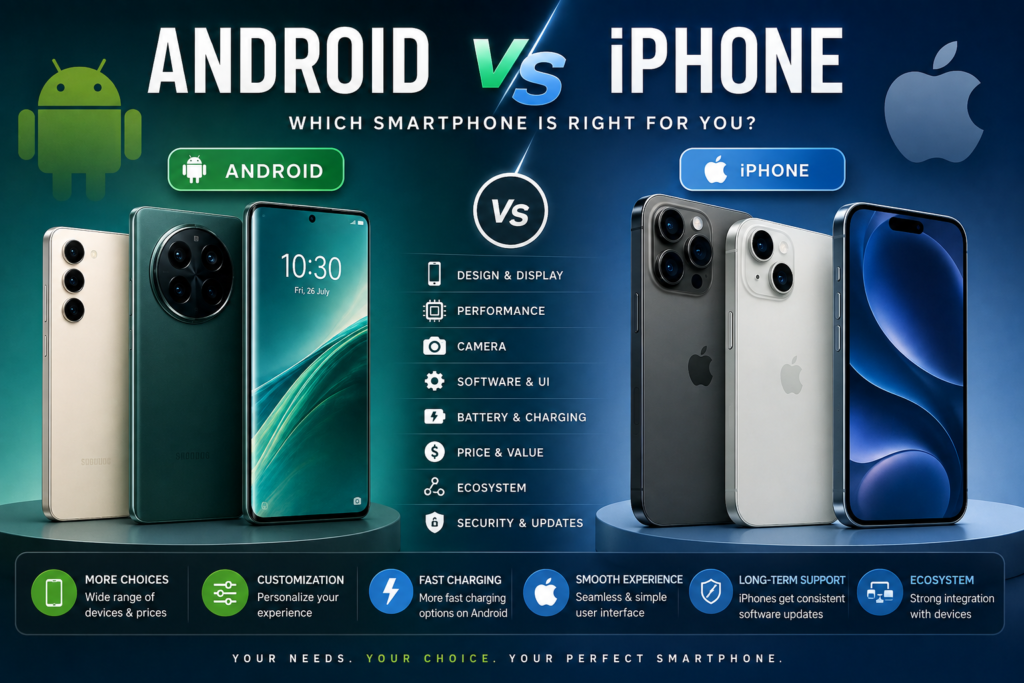
Choosing a new smartphone can be surprisingly difficult. There are hundreds of Android phones available at different prices, while Apple’s iPhone lineup offers a more streamlined selection. Both platforms have powerful features, excellent cameras, strong performance, and access to thousands of apps.
So, when it comes to Android vs iPhone, which one should you choose?
The answer depends on what you value most: price, customization, camera quality, performance, software updates, battery life, or how well the phone works with your other devices.
Android vs iPhone: The Biggest Difference
The biggest difference is the software experience.
Android is an operating system used by many smartphone manufacturers, including Samsung, Google, OnePlus, Xiaomi, Motorola, and others. This gives users a huge range of choices.
The iPhone runs Apple’s iOS, which is designed specifically for Apple’s hardware. The experience is more consistent across iPhone models.
Neither approach is automatically better. It simply depends on what kind of smartphone experience you prefer.
1. Design and Hardware Choices
Android has a major advantage when it comes to variety.
You can find affordable Android phones, mid-range devices, foldable smartphones, gaming phones, and premium flagship models. Different manufacturers experiment with different screen sizes, camera systems, materials, and designs.
iPhones offer fewer models, but Apple’s design language is consistent and recognizable. The hardware and software are also designed together, which helps create a polished overall experience.
Winner for variety: Android
Winner for consistency: iPhone
2. Performance
Both Android and iPhone can deliver excellent performance.
Apple’s custom-designed chips are known for strong performance and efficiency, while premium Android smartphones use powerful processors from companies such as Qualcomm and MediaTek.
For everyday activities such as browsing, messaging, streaming, and social media, both platforms can feel extremely fast.
If you are buying a flagship phone, performance is unlikely to be a major problem on either platform.
Winner: Depends on the model
3. Camera Quality
Smartphone cameras have become incredibly capable, and the difference between Android and iPhone is no longer as simple as it once was.
Premium Android phones can offer advanced camera hardware, high-resolution sensors, powerful zoom capabilities, and extensive photography controls.
iPhones are particularly popular for consistent image processing, video recording, and a straightforward camera experience.
If photography is your priority, compare specific phone models rather than choosing based only on the operating system.
Winner: Tie, depending on the phone
4. Software and User Experience
Android gives users more freedom.
You can customize home screens, widgets, default apps, launchers, and many other parts of the experience. Some manufacturers also add their own software features.
iOS is more controlled. Apple focuses on keeping the interface consistent and relatively simple across devices.
If you enjoy customization, Android may feel more comfortable. If you prefer a clean and predictable interface, iPhone may be the better choice.
Winner for customization: Android
Winner for simplicity: iPhone
5. Software Updates
Software support is an important factor when buying a smartphone.
Apple generally provides long-term iOS support across its devices, making iPhones attractive for people who keep their phones for several years.
Android support varies by manufacturer and model. However, several Android manufacturers now offer extended software and security support, particularly on premium devices.
Before buying an Android phone, check the manufacturer’s update policy for that specific model.
Winner: iPhone, with Android increasingly competitive
6. Battery Life and Charging
Battery performance depends heavily on the specific smartphone, screen size, processor, software, and how you use the device.
Many Android phones offer large batteries and fast charging, with some models capable of charging significantly faster than an iPhone.
iPhones can also provide strong battery life, particularly on larger models.
If fast charging is important to you, Android generally offers more options.
Winner for charging flexibility: Android
7. Apps and Ecosystem
Both Android and iPhone have access to a huge selection of apps.
The bigger difference is the ecosystem around the phone.
Apple’s ecosystem connects iPhone with products such as Mac, iPad, Apple Watch, and AirPods. Features such as AirDrop and device continuity can make switching between Apple devices very convenient.
Android also works well with Windows PCs, Chromebooks, Google services, and a wide range of smart devices.
If you already own several devices from one ecosystem, staying within that ecosystem can make your decision easier.
8. Price and Value
Android wins when it comes to price variety.
You can buy an Android smartphone at almost every major price point, from entry-level devices to expensive flagship phones.
iPhones generally sit toward the premium end of the market, although older models can provide a more affordable way to enter Apple’s ecosystem.
For shoppers on a tight budget, Android usually provides more choices.
Winner for budget options: Android
Android vs iPhone: Quick Comparison
| Feature | Android | iPhone |
|---|---|---|
| Phone variety | Excellent | Good |
| Customization | Excellent | Limited |
| Premium performance | Excellent | Excellent |
| Camera | Excellent | Excellent |
| Software simplicity | Good | Excellent |
| Fast charging options | Excellent | Good |
| Budget choices | Excellent | Limited |
| Long-term updates | Varies by brand | Excellent |
| Ecosystem | Very flexible | Excellent |
| Gaming | Excellent | Excellent |
Who Should Buy an Android Phone?
Android is a great choice if you:
- Want more smartphone choices
- Prefer customization
- Want fast charging
- Have a specific budget
- Like experimenting with new features
- Want foldable or gaming smartphones
- Prefer more control over your device
Android is especially appealing if you want to compare several brands before making a purchase.
Who Should Buy an iPhone?
An iPhone may be the better option if you:
- Prefer a simple user experience
- Already use Apple products
- Want long-term software support
- Care about consistent video quality
- Prefer a smaller selection of devices
- Want strong integration between your devices
The iPhone experience is particularly convenient for people already invested in Apple’s ecosystem.
So, Which Is Better: Android or iPhone?
There is no universal winner in the Android vs iPhone debate.
Android is the better choice for people who value flexibility, customization, variety, and different price points. iPhone is a strong choice for people who want simplicity, long-term software support, consistent performance, and seamless integration with other Apple devices.
Instead of asking which platform is better, ask which one fits your lifestyle better.
Your ideal smartphone should match the way you actually use technology—not simply the brand that happens to be the most popular.
Final Thoughts
The smartphone market has never been more competitive. Android and iPhone have both evolved into mature platforms with excellent hardware, cameras, performance, security, and apps.
Before buying, think about your budget, current devices, preferred features, and how long you plan to keep the phone.
Once you know what matters most to you, choosing between Android and iPhone becomes much easier.