
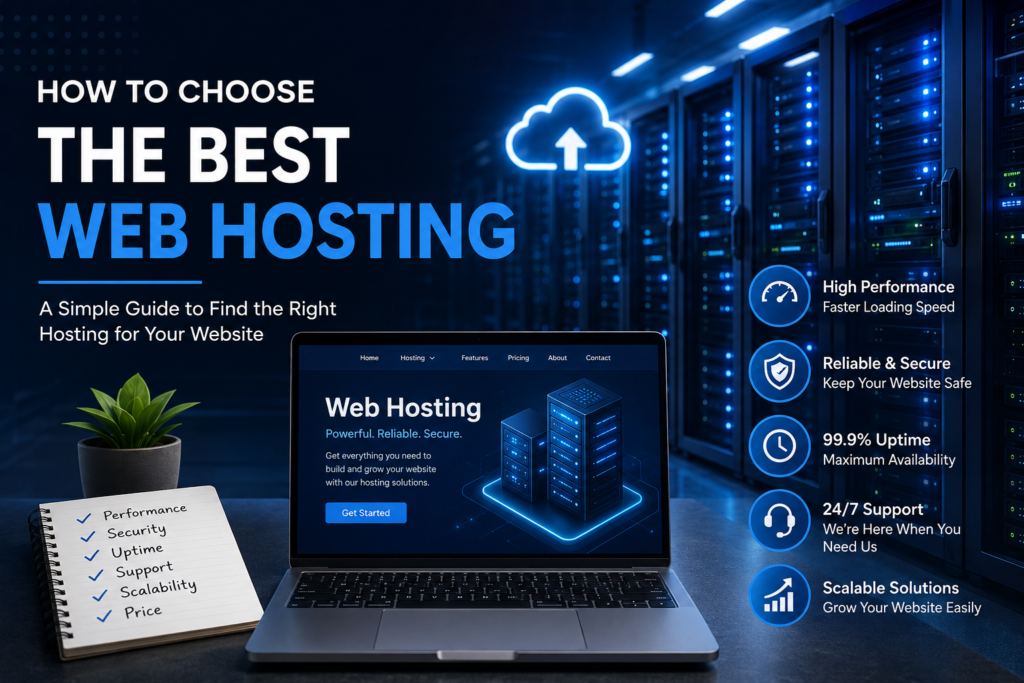
Choosing the right web hosting service is one of the most important decisions when launching a website. Your hosting provider affects your website’s speed, security, uptime, performance, and ability to grow.
With so many hosting companies and plans available, it can be difficult to know which option is actually right for you. The good news is that you don’t need to be a technical expert to make a smart choice.
Here are the key things to consider when choosing the best hosting for your website.
1. Understand What Your Website Needs
Before comparing hosting providers, think about what you are building.
A small personal blog doesn’t need the same resources as an online store or a high-traffic business website. Consider your expected traffic, the type of website you’re creating, storage requirements, and whether you plan to expand in the future.
Understanding your requirements first can help you avoid paying for resources you don’t actually need.
2. Know the Different Types of Hosting
Hosting generally comes in several forms, and each is designed for different needs.
Shared hosting is usually affordable and beginner-friendly. Your website shares server resources with other websites, making it suitable for smaller sites.
VPS hosting provides more dedicated resources and control. It’s a good option for websites that have outgrown basic shared hosting.
Dedicated hosting gives you an entire server. It offers greater control and performance but usually costs more and requires more technical knowledge.
Cloud hosting uses a network of connected servers and can make it easier to scale resources as your website grows.
3. Look at Website Speed and Performance
Website speed matters for both visitors and search engines. A slow website can lead to higher bounce rates and a poor user experience.
When comparing hosting plans, look for features such as SSD or NVMe storage, modern server infrastructure, caching options, and content delivery network (CDN) compatibility.
Don’t focus only on the specifications listed on a hosting provider’s website. Look for independent reviews and real-world performance information as well.
4. Check the Uptime Guarantee
Your website needs to be available when people try to visit it.
Most established hosting providers advertise uptime guarantees, often around 99.9% or higher. While no server can realistically promise perfect uptime, a strong uptime record is an important factor when comparing providers.
Also check whether the company clearly explains how it handles outages and maintenance.
5. Don’t Ignore Security
Website security should be a priority, regardless of the size of your website.
Look for hosting providers that offer features such as SSL certificates, automatic backups, malware protection, firewalls, DDoS protection, and regular security updates.
Some providers include these features in their plans, while others charge extra. Always check what is actually included before purchasing.
6. Consider Customer Support
Even experienced website owners can occasionally run into hosting problems.
Reliable customer support can save you considerable time when something goes wrong. Check whether the provider offers 24/7 support and which contact methods are available, such as live chat, email, or phone.
It’s also worth checking customer reviews to see how quickly and effectively support teams respond to technical issues.
7. Compare Pricing Carefully
Price is important, but the cheapest hosting plan isn’t always the best choice.
Some hosting providers offer very low introductory prices that increase significantly when the plan renews. Before signing up, check the renewal price, included features, backup policy, migration fees, and additional costs.
Instead of choosing the cheapest option, look for the best balance between performance, reliability, features, and price.
8. Think About Scalability
Your website may be small today, but it could grow significantly in the future.
A good hosting provider should make it relatively easy to upgrade your resources as traffic increases. Moving from a basic shared plan to VPS or cloud hosting should be straightforward.
Choosing a scalable provider now can save you the hassle of moving your entire website later.
Quick Checklist Before Choosing a Host
Before purchasing a hosting plan, ask yourself:
- Does the plan offer reliable uptime?
- Is the server performance suitable for my website?
- Are SSL and security features included?
- Does the provider offer regular backups?
- Is customer support available when I need it?
- What is the renewal price?
- Can I upgrade the plan as my website grows?
- Are there any hidden fees?
Final Thoughts
The best web hosting isn’t necessarily the provider with the lowest price or the longest list of features. It’s the one that matches your website’s current needs while giving you enough room to grow.
Take some time to compare hosting plans, read independent reviews, check renewal costs, and understand exactly what you’re getting before you sign up.
A reliable hosting provider can give your website a strong foundation, helping it stay fast, secure, and available as your online presence grows.