Technology is changing faster than ever. Tools powered by artificial intelligence, automation, cloud computing, and data are becoming part of everyday work. You do not need to become a software engineer to keep up, but learning the right tech skills can make a major difference to your career.
Whether you are a student, freelancer, entrepreneur, or working professional, these are some of the most valuable technology skills to start building before 2030.
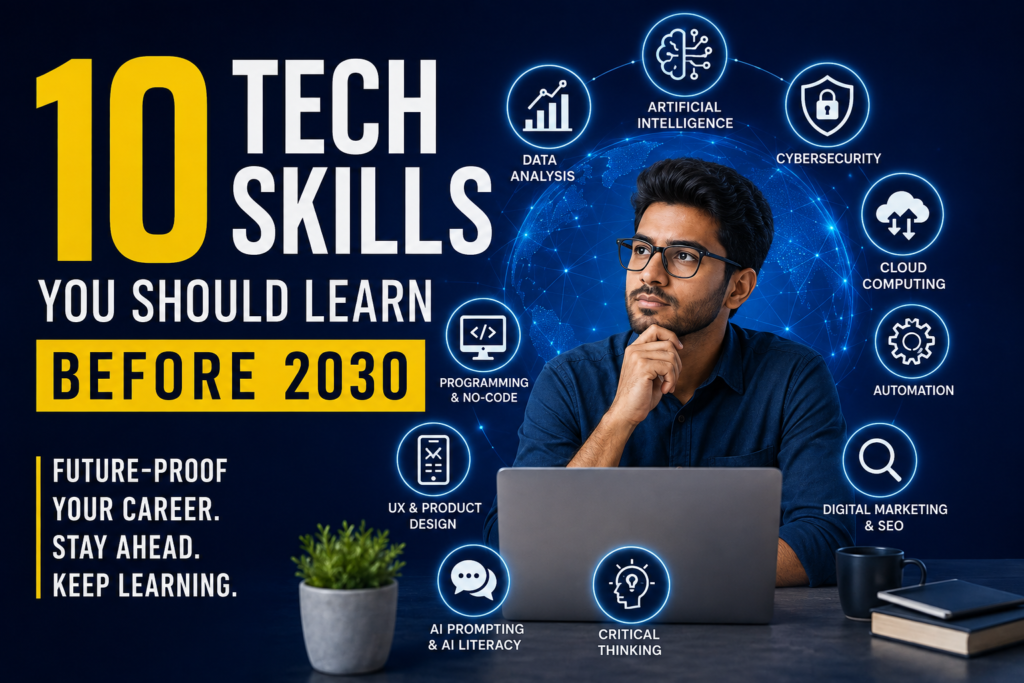
1. Artificial Intelligence and AI Tools
AI is no longer limited to research labs or big technology companies. Businesses are already using AI for writing, design, customer support, research, data analysis, and automation.
Learning how to use tools such as AI assistants, image generators, research platforms, and AI-powered productivity software can help you work faster and smarter.
The important skill is not simply knowing how to use one AI tool. It is understanding how to identify tasks where AI can actually save time.
2. Data Analysis
Data is behind many of the decisions businesses make today.
Basic knowledge of spreadsheets, data visualization, analytics platforms, and tools such as SQL can help you understand what the numbers are really saying.
You do not need advanced mathematics to get started. Learning how to clean data, identify patterns, create reports, and explain insights is already valuable across marketing, finance, sales, and operations.
3. Cybersecurity
As more personal and business information moves online, cybersecurity is becoming increasingly important.
Understanding concepts such as strong authentication, phishing, password security, privacy, malware, and network protection can help protect both individuals and organizations.
For people interested in a technology career, cybersecurity can also offer strong opportunities as companies continue investing in digital security.
4. Cloud Computing
Cloud platforms have transformed the way companies store data and run applications.
Learning the fundamentals of cloud computing can give you a better understanding of how modern websites, applications, databases, and business systems operate.
You can begin with basic concepts such as cloud storage, virtual machines, databases, servers, and cloud security before moving into platforms such as AWS, Microsoft Azure, or Google Cloud.
5. Automation
Automation is one of the most practical skills for the future of work.
From automatically organizing data to connecting different business applications, automation can eliminate repetitive tasks and reduce human error.
Learning platforms such as Zapier, Make, or similar workflow automation tools can be useful even if you have little or no programming experience.
6. Digital Marketing and SEO
Having a great product is not enough if people cannot find it.
Search engine optimization, content marketing, social media, email marketing, and paid advertising remain important digital skills for businesses.
SEO tools such as Semrush and similar platforms can help marketers research keywords, analyze competitors, monitor rankings, and discover content opportunities.
Understanding how people search online and what makes content useful can become a valuable skill well beyond 2030.
7. Programming and No-Code Development
Programming remains one of the most useful technical skills you can learn.
You do not necessarily need to become a professional developer. Learning basic HTML, CSS, JavaScript, Python, or another programming language can help you understand how technology works.
At the same time, no-code and low-code platforms are making it easier for non-developers to build websites, applications, and automated workflows.
8. AI Prompting and AI Literacy
Knowing how to communicate effectively with AI systems is becoming a practical workplace skill.
Good prompts provide clear context, explain the desired outcome, and include relevant constraints. But AI literacy goes beyond prompting. It also means knowing when AI can be trusted, when its answers should be verified, and how to protect sensitive information.
This combination of AI usage and critical thinking will likely become increasingly important.
9. UX and Product Design
Technology is ultimately created for people. A powerful application can still fail if it is difficult or frustrating to use.
Learning the fundamentals of user experience design can help you understand how people interact with websites, applications, and digital products.
Skills such as wireframing, user research, interface design, and usability testing can be valuable for designers, marketers, founders, and developers alike.
10. Critical Thinking
Perhaps the most underrated technology skill is the ability to think critically.
As AI makes it easier to generate information, code, images, and content, the ability to evaluate that information becomes even more important.
Before accepting an AI-generated answer or online claim, ask: Is the information accurate? What is the source? What evidence supports it? Could there be another explanation?
Technology can provide answers quickly, but human judgment still matters.
The Future Belongs to People Who Keep Learning
You do not need to learn every new technology that appears. Instead, focus on building skills that remain useful as individual tools change.
AI, data analysis, cybersecurity, cloud computing, automation, SEO, programming, and critical thinking are all areas worth exploring before 2030.
The biggest advantage may simply be becoming comfortable with learning new technology. The tools will continue to change, but the ability to understand, adapt, and use them effectively can remain valuable for years to come.
SEO Keywords: tech skills, technology skills, future tech skills, AI skills, digital skills, technology trends, skills for 2030